

Boğaziçi University Tarsus-Gözlükule Excavations Research Center
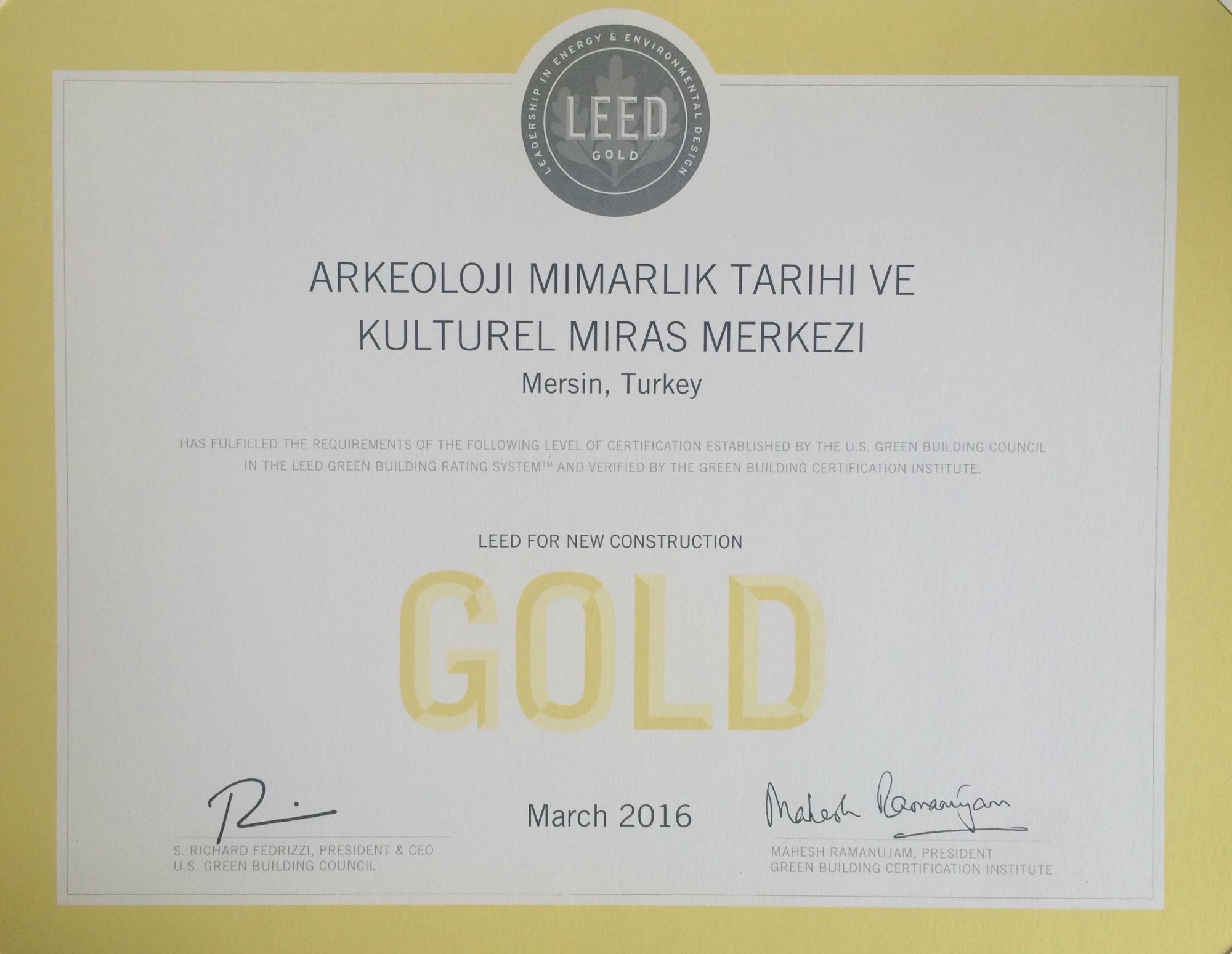
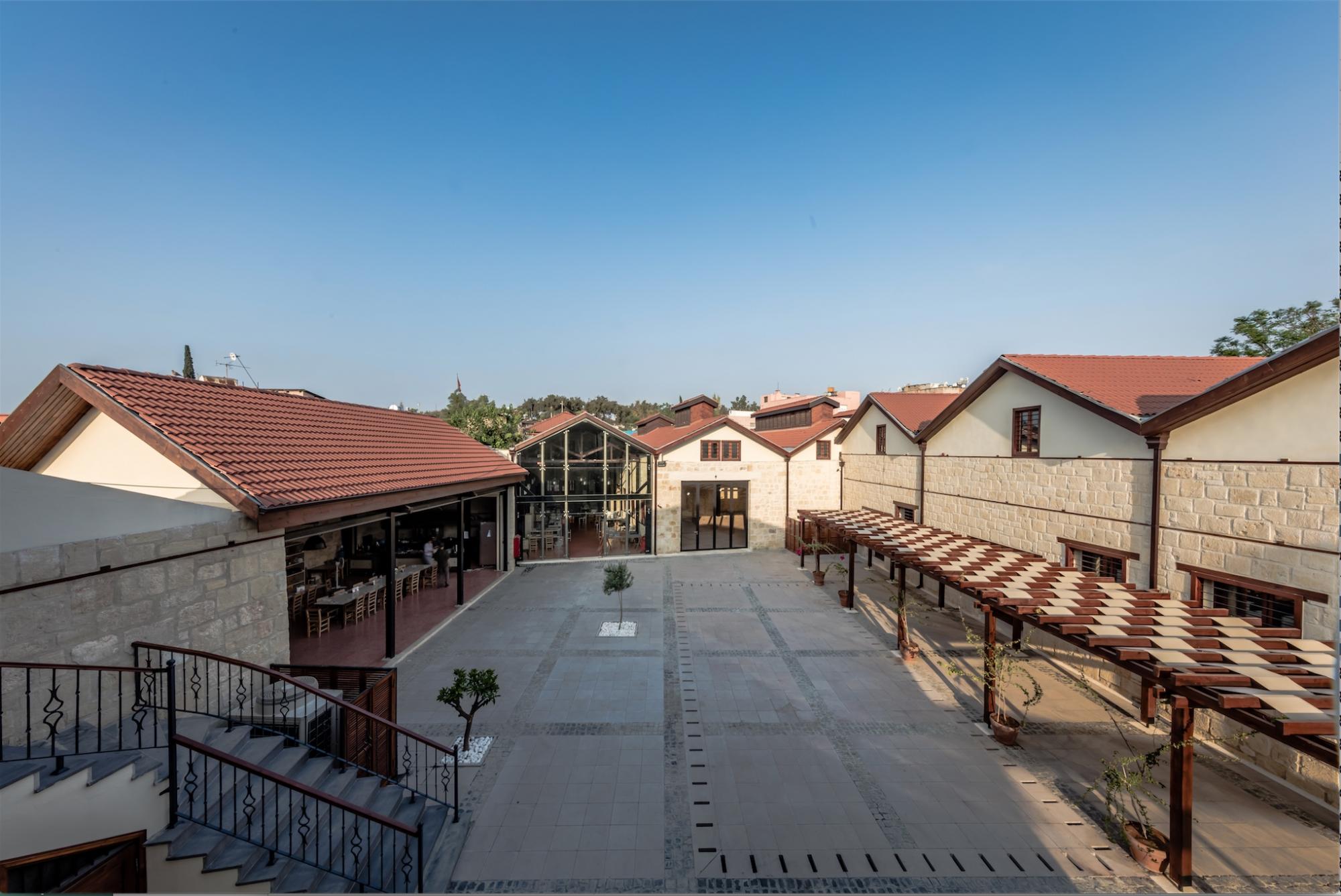
Leed Gold: Green Building Certificate Courtyard of the Center. Photo by Yerçekim 2016
Tarsus-Gözlükule Excavations Research Center is located in the urban center of Tarsus, just south of the Gözlükule Höyük where archaeological excavations are carried out by Boğaziçi University. The Center is in an old cotton gin factory allotted to Boğaziçi University in the 2000s. This wooden-roofed stone structure was built in the early 20th century originally to be used for the separation and storage of cotton fibers from the core. The building has gone under reconstruction by Boğaziçi University with the permission and supervision of the Adana Regional Cultural Heritage Board, and repurposed as a research center for the archaeological excavations, conservation laboratory, storage facility for study collection, library and exhibition space.
The first settlement of Tarsus, Gözlükule mound, is located in the center of the district. The mound was excavated by an American team under the direction of Hetty Goldman in the 1930s and 1940s as a Bryn Mawr College project. The results of the Goldman Period excavations published in three volumes since the 1950s constitute one of the main reference sources of Anatolian archeology. This settlement, which was established in the Neolithic period approximately 9000 thousand years ago, was inhabited for a long time without interruption until the Early Islamic Period.
Tarsus-Gözlükule Höyük Surveys initiated in 2001 by Boğaziçi University with the support and guidance of Machteld Johanna Mellink, a member of the Goldman excavation team and one of the leading experts in Anatolian archeology 06.06. With the decision of Council of Ministers dated 12296 numbered 2007, it continues as scientific excavations.
With the support and guidance of Machteld Johanna Mellink, a member of the Goldman excavation team and one of the leading experts in Anatolian archeology, Tarsus-Gözlükule survey and research project, initiated in 2001, continues as scientific excavations with the Council of Ministers Decision No. 12296 dated 06. 06. 2007.
The new excavation initiated by Boğaziçi University examine the changes and continuities of the transition period from the Late Antiquity to the Early Islamic Period and the transition from the Bronze Age to the Iron Age (around 1200 BC). The main purpose of Tarsus-Gözlükule Excavations and Surveys at Boğaziçi University is to contribute to the perception, documentation and sustainable preservation of this mound, which is the cultural heritage of the region, within the surrounding urban settlement and natural environment.
The opening ceremony of the Center took place on 18 February 2017.
For an article on restoration and re-purposing of the building, click here.
The 3rd Cilician Chronology Workshop was held on 30 May-1 June 2017 at Boğaziçi University Tarsus-Gözlükule Archeology and Research Center.
The first of the Boğaziçi University Tarsus-Gözlükule Archeology and Research Center Talks, initiated in 2018 with the contribution and support of Tarsus Chamber of Commerce and Industry, was held on Thursday, March 22nd. Distinguished Emeritus Professor Selçuk Esenbel gave a lecture on Japan on the Silk Road to a large group of people from Tarsus, Mersin and Adana.
13th Architecture Awards Ceremony of Turkish Architects Association has awarded Boğazici University Tarsus-Gözlükule Excavations Research Center the Building Prize in the February 16, 2019''The growing trend in the world and Turkey, for industrial structures to be integrated to the urban life with more efficient use should be encouraged. Implemented by Saadet Sayın for the Boğaziçi University in Tarsus, The Gözlükule Excavation Research Center has received the support of the Jury as an exemplary project that transforms a cotton gin factory which had lost its importance into an academic and social use, and has been found worthy of the TürkSMD ‘Construction Award.’ The project, which respects the structure, gives priority to natural and environmental values and energy conservation efforts.”
In 2019, Boğaziçi University Tarsus-Gözlükule Archeology and Research Center has been awarded Europa Nostra Cultural Heritage Conservation Prize. The jury admired “the original new use of the site, which is as original as the history of the ensemble. Research has shown that the site, of simple and functional architecture, is of notable significance in European history. In addition, the functional integration of the converted industrial heritage site into the urban context has contributing to the regeneration of the neighbourhood.” The Award Ceremony will be held on 29 September 2019 in Paris. For an interview of Aslı Özyar, Director of the Tarsus-Gözlükule Excavations Project, regarding the Europa Nostra Prize, click here.


